
There is currently a nationwide issue with the booking system. Please standby as they attempt to fix this.
Audio Described and pre-show Touch Tours
New Zealand Sign Language
Relaxed Performances
By Kerryn Palmer
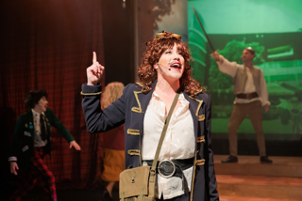
YAGAHCWYHLFOYS!!
If you attended Circa’s recent production of Cinderella you would know what this magic spell stands for – you always get a happy conclusion when you have lovely friends on your side. Originally used in Michele Amas’s Mother Goose, it is one of several recurring conventions employed in Circa Theatre’s Christmas pantomime, now in its 17th year of production. This article outlines the history of what is now a firmly entrenched Circa tradition and examines what magical ingredients have combined to make the pantomime a successful annual event, that caters to an intergenerational family audience.
The arrival of Europeans heralded the introduction of a new style of live performance to Aotearoa. Vastly different from the indigenous Whare Tapere, European dramatic performance was unleashed on our shores a mere 12-months after the signing of Te Tiriti o Waitangi [1]. It is, therefore, no surprise that pantomime – based on the Italian Commedia dell’arte, but adapted by the English in the 1700s – was an early populist form of entertainment in New Zealand. What is surprising is its longevity, and how in 2021, Pantomime is still a popular and much-loved form of entertainment in Aotearoa.
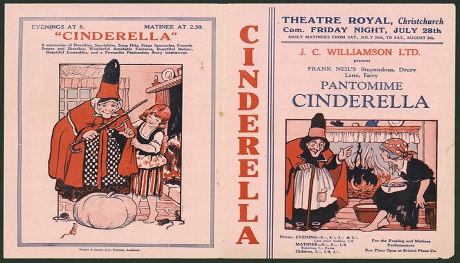
Wellington’s Circa Theatre is arguably the most prolific professional company upholding the grand tradition of pantomime in contemporary New Zealand. For 16 years the annual Christmas pantomime has been delighting intergenerational audiences on the waterfront. With no signs of abating, it boasts Circa’s largest houses of the year and regularly sells over 50% of tickets before it opens. It is also Circa’s longest running show each year, with the actors and crew performing for an exhausting and exhilarating seven weeks (five before Christmas and two in early January). Gavin Rutherford’s – world famous in Wellington – Dame drives each show with aplomb and for just under two hours each night, seven seasoned performers fill the stage with music, magic movement, topical jokes, and general silliness.
Growing up in England in the 1950s, the Christmas pantomime was an annual event for Roger Hall. He remembers attending with his parents and loved that it was a shared theatrical experience that both generations could enjoy. In 2003, an after-show foyer conversation between Roger, Paul Jenden, and Susan Wilson unearthed collective childhood memories of pantomimes, and recognition of how their delight and enjoyment of them, had influenced their choice of career. From this conversation, the idea to present a professional, contemporary, annual family show, using the traditional English pantomime form was born.
In the 1950s, Wellington’s Repertory Theatre began producing Christmas Pantomimes (“Past Productions”). These were led by the memorable and fabulous David Tinkham.
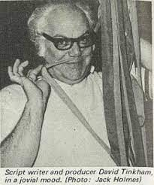
George Webby referred to Tinkham as; “one of the finest pantomime dames I ever came across… a big man, David made an even bigger dame, commanding the stage with his obvious and infectious enjoyment” (Webby 202). Theatre stalwarts Kate Harcourt, and Ginette MacDonald also reveal the influence that Tinkham had on their careers, describing him as “legendary” (McDonald) and an “inspired director” (Harcourt qtd. in O’Donnell). Tinkham’s partner in crime for several years was Peter Harcourt, together they directed and produced innumerable pantomimes, utilising Harcourt’s dry wit, knowledge of theatre and popular music, and Tinkham’s improvisation talent and legendary Dameness. (Webby 202). Attending these shows annually, was a young Susan Wilson. She has fond memories of them being huge extravaganzas, boasting large casts of children and of principal boy – Dorothy Mc Kegg’s – ‘marvelous tights-clad legs.’(Wilson).
Two years after Paul, Roger, and Susan’s epiphany in the theatre foyer, the inaugural Circa Pantomime was launched. Bursting onto the stage in 2005 came Roger Hall’s Cinderella, with songs by Paul Jenden and music by Michael Nicholas Williams. Instead of one traditional dame, this inaugural production had three dame-like characters; Ellie Smith as the Fairy Godmother, and playing the Ugly sisters – Timothy Bartlett as Obetia and Robert Tripe as Di-aphanite. (The more traditional single Dame character came into force in 2006, which saw Julian Wilson delight audiences for three years in a row.) A Helen Clarke Labour-led government saw the inclusion of such topical gems as;
“Catering! Everything reasonable is booked up! Pita Sharples Take Away Kai; Don Brash’s Take Away Chinese; and Winston Peters Bugger Off Curries. A caterer, a caterer, my kingdom for a caterer!!”
“And “Jonathan Hunt would have been here but he’s been detained by a narrow doorway.” (Hall, Cinderella)
The addition of topical political jokes or references to the contemporary political climate are just one of the fundamental principles that make up the trope of Pantomime. Winston Peters has enjoyed his fair share of mentions in the Circa Pantomime and the 2020/21 version, very topically involved hero of the COVID pandemic Ashley Bloomfield. Hall writes: [Insert Topical joke here] in his scripts so that they can be updated each time they are performed, and the recent Cinderella script is prefaced with:
“Topical references: This show was written for Wellington in 2020 in the midst of a global pandemic when Doctor Ashley Bloomfield was our hero and the world was shut down. The story is solid but there will be topical references that won’t work for everywhere. Feel free to have a tweak and make it relevant to your time and location. (Leary and Rutherford)”
This flexibility means that the scripts have a life outside of their Circa season and will often go on to be performed throughout New Zealand by local repertory groups. For example, Central Hawke’s Bay Waipawa Music and Drama Club has committed to a Hall pantomime for the third successive year. In 2019, they did his Jack and the Beanstalk (including the Jenden and Williams’ songs). Hall was so pleased to see an intergenerational audience of around 300, as well as a cast of 30; that he offered to do a version of Cinderella set in Waipawa. This was very successful, and this year it is Aladdin that has a Hawkes Bay setting.
Other fundamentals that have been borrowed from the traditional pantomime form are: using a well-known story, local references- again interchangeable – romance, cross dressing, audience interaction, and music.
Michael Nicholas Williams has been the musical director for 14 of Circa’s Pantomimes. A dynamic and enthusiastic musician, Michael began collaborating with Paul Jenden in co-writing original songs for each show. Cinderella: Version One had 14 original songs. The opening song- perhaps in recognition of this being the beginning of a new Wellington tradition – guided the audience in what they were about to experience:
It’s a wonderful world
In pantomime
There’s fantasy unfurled
In pantomime
Women wearing stockings
Playing men may be shocking
But it’s all part of being in pantomime
It’s a topsy turvy world
In pantomime
There are men playing girls
In pantomime
All the actors will be beaming
While the audience is screaming
But it’s all part of being in pantomime
There’ll be singing and some roaring
You all have to join in
Don’t be shy or feel afraid
There’ll be pretty sets and costumes
Catchy songs and hot tunes
Lots of mayhem to be made
There is nothing in the world like pantomime
All the little girls and boys like pantomime
Though the story is quite crazy
And the jokes are sometimes racy
This is all part of being.
You won’t believe what you’ll be seeing
But it’s all part of being in pantomime. (Hall, Cinderella)
The writing of original songs continued until 2017’s Peter Pan, which saw a return to pantomime tradition of using contemporary pop songs. This has been the modus operandi since then, and if the joyous dancing, singing, and revelry from the audience at 2020/21’s Cinderella is anything to go by, then it’s a hugely popular choice.
“As much as I liked writing scores for the earlier shows, having familiar pop songs (and using them in an unexpected way) has really added another level. I love watching the audience when they hear a song from their teenage years that they haven’t thought about for decades, and you can see the joy. (Williams)”
Circa’s pantomimes have always been based on a well-known, traditional story or fairytale. The merits of presenting a well-known story are that they are, according to Hall, ‘damn good stories,’ and that the classic Hero’s Journey template means that people have a fair idea of what they are coming to see. Perhaps this means they can relax in the knowledge that the narrative is in safe hands and therefore focus on the elements of theatricality that help bring the story to life on stage. To date there have been three versions of Cinderella, two of Jack and The Beanstalk, two Red Riding Hoods, two Robin Hoods, two Aladdins as well as a Puss in Boots, a Mother Goose, a Dick Whittington and His Cat, a Peter Pan, and one Alice In Wonderland.
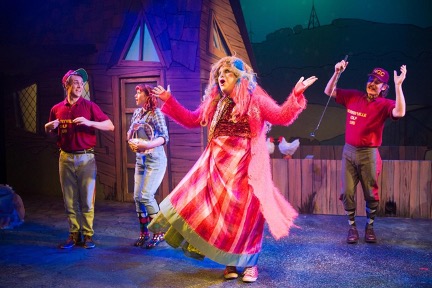
With the exception of Mother Goose – written by Michele Amas in 2013 – Roger Hall penned all pantomimes up until 2017, when Pinky Agnew and Lorae Parry wrote Peter Pan. Twenty nineteen saw panto. stalwarts Simon Leary and Gavin Rutherford collaborate to write Alice In Wonderland. They are now working on their third collaboration to be announced soon. When asked to pick a favourite, stage manager extraordinaire Eric Gardiner – who has stage managed all 16 – chose the most recent, Leary and Rutherford’s Cinderella, with Mother Goose coming a close second. He explains how being written in-house makes a difference as the authors know the theatre and its limitations. Gardiner is perhaps the unsung hero of the Circa Pantomime. For 16 years, he has been the trusted and hardworking stage manager and always has a delightful cameo sometime in the show. Fondly written into the scripts with directions such as:
“The conveniently placed frog turns into a weathered old man (The stage manager Eric)
ERIC
Ribbit.
Eric hops off. Probably grumbling. Wondering what his life has come to.“
(Leary and Rutherford.)
In past years he would often be accompanied by the beautiful Precious (Gardiner’s Golden Lab.) who would amble on stage to delight the audience at some stage during the show. Asked why he continued to do the pantomime each year Gardiner replied:
“Personally, I really enjoy the involvement, not only as stage manager, but quite often taking part in the action on stage! It’s always a very busy production with set pieces coming and going all the time and that suits me. The cast generally help with this, making it truly a combined effort; cast and backstage.” (Gardiner)
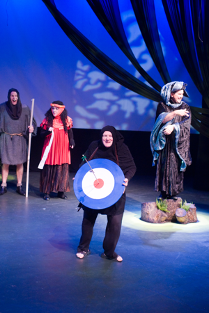
As with any long-held tradition and in particular such a Eurocentric one, it is important to interrogate the relevance of Pantomime in contemporary New Zealand. There is no escaping that pantomime is a problematic genre. Fairy tales are built on misogyny, there is a lack of diversity of characters, in particular in terms of people of colour, and is all that cross-dressing PC? In a 2013 Guardian article titled “Hands Off Our Panto Dames. Cross-Dressing Offers a Vital License for Subversion,” self-proclaimed cross-dresser Grayson Perry provides some interesting insights into this area of the debate.
“Pantomime and its cross-dressing traditions spring out of that long tradition of carnival and subversion; a time when everything went topsy-turvy, people were able to mock their rulers, everything became anarchic. That’s where it comes from. And interestingly, cross-dressing still has that potency. As a cross-dresser myself, I know it’s a license to cause mischief, and that’s part of the role you take on.” (Perry)
He acknowledges that it is tricky territory, some people struggle with the concept of it being an always comedic role, but for him the genuine outrageousness of the Pantomime Dame is, it is a way of edging into “darker territory, without causing serious offence… It’s the honest fool thing; that’s part of what it’s about. (Perry)
Using in-house creators – such as Michele Amas, Simon Leary and Gavin Rutherford – has opened the way for collaborators to challenge and change stereotypes and tropes. For example; Mother Goose saw the introduction of the first gay character, this year’s Dandini uses the pronouns they/them, and Leary and Rutherford’s Cinderella script is prefaced with a note on diversity:
“We encourage you to cast the show diversely, panto. is a great way to play with gender. The step siblings don’t have to be the same ethnicity either. Have fun with it.” (Leary and Rutherford)
Circa has also begun to offer relaxed [2] and signed [3] performances, in an effort to be more inclusive and ensure that their pantomimes are as accessible as possible.
Working in a more collaborative way in rehearsal, casting diversely, and being open to input from all creatives in the rehearsal room, are all ways that traditional forms can be challenged and subverted. Much of the early weeks of rehearsal are spent improvising on the floor and the benefits of having writers such as Gavin and Simon writing and performing is that things can be trialed and hashed out in the rehearsal room. Like many New Zealand plays, the staging of them observes a strong collaboration between director and playwright. The director will often provide dramaturgical script guidance as well as overseeing the cast and production elements. Eric recalls how:
“During rehearsals, which is always a hilarious time, the script is being cut and pasted continuously, and quite often we don’t get the final draft until late in production week! Even then changes are regularly happening during the season,” (Gardiner)
This form of flexible and collaborative rehearsing needs a skilled captain at the helm. The indefatigable Susan Wilson leads the Circa pantomime team each year. Her love of the old-style Pantomimes, her belief in them as a way of getting children to the theatre and to love the theatre, has been one of the reasons she has continued each year. Having worked with Roger Hall as a dramaturg and script editor on Gliding On in the 1970s, Susan worked closely with Roger and Paul in the early years to develop this strong tradition. She relishes that her concept of instilling a love of theatre in children has proven true, and that the Pantomime appeals to an intergenerational audience. As a founding member of the Circa Council, she finds it hugely satisfying that the annual Pantomime is financially rewarding for Circa. It boasts their highest box office return each year, and it is a huge source of pride to Circa how many families now value it as an annual family tradition. Circa Councillor Lyndee-Jane Rutherford especially loves seeing adults who came as young children, now bringing their own kids, and how it has become an annual tradition for many families, with outings including up to four generations. (Rutherford LJ)
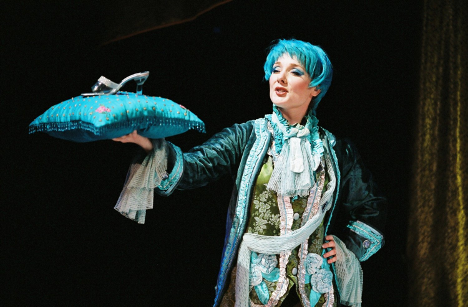
The traditional format of Pantomime incorporates three key narrative elements; Romance, Magic, and Clown and Circa embrace each of these elements in its productions. Romance, a key element in fairy tales, usually tells heteronormative stories of first love. Good conquering bad and a man and a woman overcoming adversity to live happily ever after in wedded bliss. Cinderella is the perfect example of this with its rags to riches story and as Roger Hall notes ‘People love the show to end with a wedding.’ Hall sees the importance of writing in the love-interest early on in the script and from that first eye contact, the first look there is a ‘clang of a triangle’ and cupid’s arrow can be felt winding its way between the two main characters.
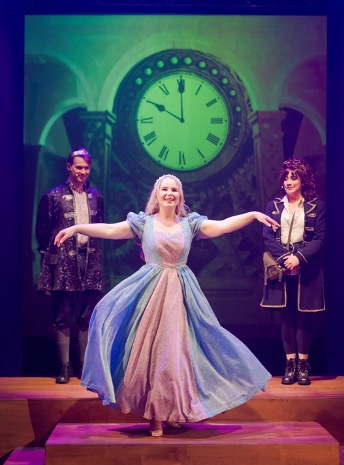
The magical or transformative elements of the pantomime are also fully entrenched in Circa’s productions. High production values are guaranteed, in particular in terms of costume. The design of these was Paul Jenden’s domain until 2012 when it was expertly taken up by Shelia Horton. Michael Nicholas Williams describes the power that the transformative element in the costume can have:
There was a glorious moment in last year’s Cinderella when Cinders’ dress transformed before our eyes and one night there was a little girl in the front row whose mind was blown. She sat there for the next 2 minutes (missing our awesome song!) with her eyes bugged out and jaw dropped with a mixture of amazement and almost fear. (Williams)
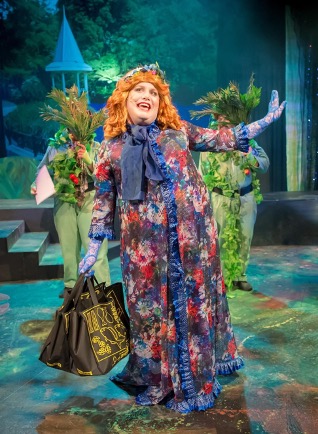
Gavin Rutherford delights in the clown and lazzi [4] elements of traditional Pantomime and since 2010 has embraced his inner clown in the performance of his much-loved dame. Each year for the past 11 years Rutherford has donned his Dame persona and delighted audiences with her acerbic, smutty, and narcissistic wit. It is a delight to watch Rutherford work a crowd. Masterful in improvisation, connecting with an audience, and keeping the action flowing, the audience feels in safe hands with his skillful manipulation of narrative and cheeky asides. Each year the dame is slightly different and yet the same, giving the audience a touchstone. Rutherford is so good at playing up the grotesque and revelling in his inner clown that it is easy to forget he is also a fine ‘serious’ actor with a slew of awards under his belt. It’s also easy to overlook how gruelling it must be to don such an elaborate costume and wig for each night nearly 50 times in a row. It’s hard to imagine a better dame and it seems Rutherford has categorically succeeded in taking over the mantle from Tinkham. Gavin revels in the character that he has created: “The Dame makes me laugh; she’s just so messed up – she’s such a dick!” (Rutherford)
Asked what is it about the Pantomime that appeals, parents and children alike relate how the music, dance and comedy combine to create a wonderful evening out:
“It’s just got everything in it. Music, dance, comedy. A really great show. Lots of energy and lots of laughs.”
“Well written, well played. Very, very funny. Brilliantly and hilariously improvised at one point during the performance I saw. The last pantomime I saw was at the London Palladium – this was better than that.”
“This was the best show we had all seen in a very long time! Probably the thing we enjoyed most was the actors’ ability to relate to the audience and tailor jokes to current events.”
“We love the dame!! The whole cast is always amazing. It had a very different feel to it this year with the music, but we thought it was HILARIOUS. We are used to having the original songs and my kids are still singing ‘The Undies for Africa’ song from ALADDIN. We had visitors from the UK with us this year and they said this was hands down the BEST panto. they had ever seen.”
(Quotes taken from Circa post-show surveys.)
The magic ingredients of traditional form with a contemporary twist, accessibility, high production values, and a highly talented cast and crew, have all contributed to the success and longevity of the Circa pantomime. Not only does it appeal to a range of age groups, but it also provides a steady income to the hard-working cast and crew for nearly three months of the year, and as Eric Gardiner observes, “it is always a fun affair for cast and audience, so long may they reign!”
Footnotes
[1] In 1841 David Osborne and three other actors staged a comedy called The Lawyer Outwitted at Auckland’s Watson’s Hotel. It was the first known European-style theatre production in New Zealand. (Atkinson)
[2] A show that has been adapted to suit audience members who may need a more relaxed environment.
[3] In New Zealand Sign Language, for hearing impaired audiences.
[4] Traditional Italian improvisation
Works Cited
Atkinson, Laurie. “‘Actors and Acting – Early Acting, 1840s to 1920’.” Te Ara – the Encyclopedia of New Zealand, Ministry of Culture and Heritage, 2014, http://www.TeAra.govt.nz/en/actors-and-acting/page-1.
Gardiner, Eric. Circa Pantomime E-mail-Interview. 26 Mar. 2021.
Hall, Roger. Circa Pantomime Interview. 6 Mar. 2021.
Hall, Roger. Cinderella. 2005.
Leary, Simon, and Gavin Rutherford. Cinderella. 2020.
McDonald, Ginette. “Ginette McDonald and The Thrill of the Theatre.” Circa Theatre, 4 Feb. 2013, https://www.circa.co.nz/ginette-mcdonald-and-the-thrill-of-theatre/.
New Zealand Ministry for Culture and Heritage. Early Acting, 1840s to 1920. https://teara.govt.nz/en/actors-and-acting/page-1. Accessed 20 Apr. 2021.
O’Donnell, David. “Dame Kate Harcourt and the Art of the Senior Actor.” The Theatre Times, Oct. 2020, https://thetheatretimes.com/dame-kate-harcourt-and-the-art-of-the-senior-actor/.
Pantomime Production: “Robin Hood” – Nelson Photo News – No 145: November 11, 1972. https://photonews.org.nz/nelson/issue/NPN145_19721111/t1-body-d42.html. Accessed 20 Apr. 2021.
“Past Productions.” Wellington Repertory Theatre, Wellington Repertory Theatre, 2021, https://www.wellingtonrepertory.org.nz/archives/past-productions/.
Perry, Grayson. “Hands Off Our Panto Dames. Cross-Dressing Offers a Vital License for Subversion,”.” The Guardian.Com, The Guardian, 2 Dec. 2013, https://www.theguardian.com/commentisfree/2013/dec/02/panto-dames-cross-dressing-grayson-perry.
Rutherford, Gavin. Circa Pantomime Interview. 1 Mar. 2021.
Rutherford, Lyndee-Jane. Circa Pantomime Email Interview. 22 April 2021
Webby, George. Just Who Does He Think He Is? Steel Roberts, 2006.
William’s, Michael Nicholas. Circa Pantomime Email interview. 24 Mar. 2021.
Wilson, Susan. Circa Pantomime Interview. 1 Mar. 2021.
Kerryn Palmer is a theatre director and teacher, with a PhD in making theatre for and with Young People.
Circa Theatre will today sign an agreement with Te Papa Chief Executive Rick Ellis that will see Circa Theatre join forces with the Museum of New Zealand Te Papa Tongarewa to foster and develop a closer working relationship between the two iconic organisations.
The Memorandum of Understanding recognises the shared connections between the two organisations and reflects a mutual desire to collaborate, commercially and creatively, in order to bring even greater cultural and artistic offerings to the public – including the development of a vibrant and dynamic cultural precinct in the physical space that Te Papa and Circa are situated in.
“This is an exciting agreement for both the Museum and the Theatre,” says Mr Ellis. “It makes sense to have a closer working arrangement between Te Papa and Circa Theatre, as we are not just neighbours in proximity, but we also share the same goals in wanting to develop a cultural hub in the Wellington waterfront space.”
Circa Theatre co-founder and Circa Council member Carolyn Henwood CNZM agrees and adds: “With our building renovations due to begin later this year, this unique partnership marks an exciting period for Circa Theatre. It will ensure greater synergy between both organisations – who share a passion for authenticity and innovation – and a commitment to provide visitors to the precinct with an even richer, more holistic experience. The potential and opportunities are endless.”
By working more closely together, both Te Papa and Circa Theatre hope that they can create a cultural heart of Wellington and one that will increasingly attract more visitors, both local and international.
“As it is, the Wellington waterfront is a wonderful place for people to spend time,” says Ms. Henwood. “We believe that this special relationship, by uniting respective cultural and creative strengths, will help make it an even better and more attractive destination and one that will continue to evolve and flourish over time.”
RELATED ARTICLES:
- stuff.co.nz – 19 May 2017 – Circa Theatre signs agreement with Te Papa ahead of planned renovations
School holidays
Top 5 things to do!
The school holidays are fast approaching with the rain and windy winter weather. As we all know summer months are excellent for children to be home when there is so much to do. Parks, picnic, beaches, pools, camping, tramping or just letting them run around outside constructing mud pies and forts.
The winter months make entertaining children a more difficult task. The cold weather has everyone in a bad mood and there are only so many movies to watch or books to read. Organizing play dates can also be dangerous; after the initial excitement and first hour of play the children troop over complaining “We’re bored” or “there’s nothing to do.”
Here at Circa Theatre we have a solution.
Playshop Performance Company present Grimm Bedtime Stories is a hilarious and magical tale of brothers who are determined to stay up late by thrilling each other with stories. Some stories are scary, some are sweet and others are much too fun! Theatre is not passive like television and films can be, rather your child will be encouraged to join in and participate in the action and creativity.
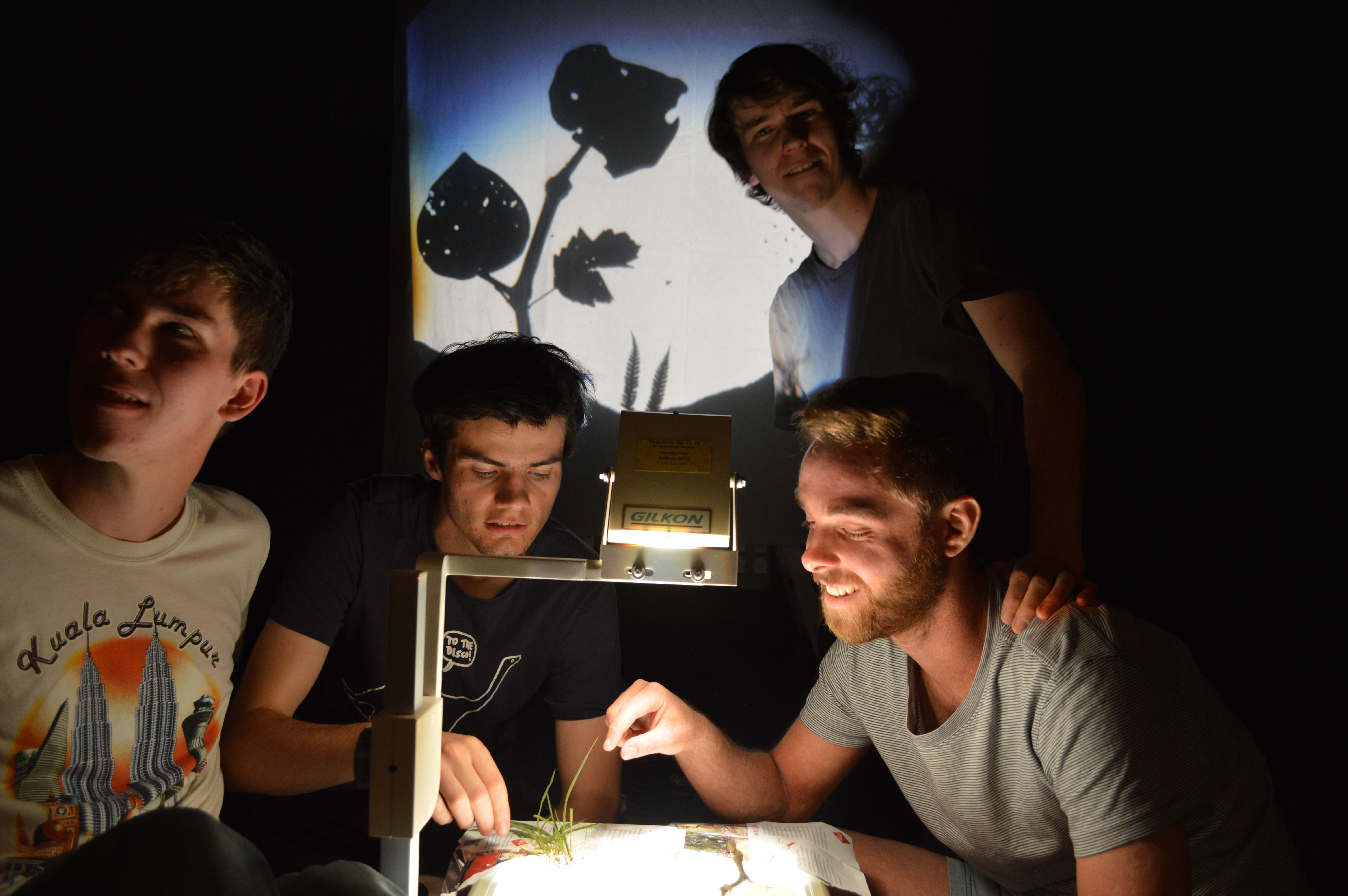
Grimm Bedtime Stories opens specially for the July school holidays. With 11am shows daily this is the perfect chance for you to get your children out of the house and into an immersive theatrical experience.
Interactive theatre is an experience like no other. Grimm bedtime stories is a show created specifically for children aged between 5 – 10 years of age, your children will be invited into this secret world, where bed sheets become landscapes, torches become monsters eyes, and pyjamas become mystical puppets.
Our top five recommendations for the July School Holidays!
- Go and see Grimm Bedtime stories at Circa Theatre! Discover a world of interactive theatre and then go exploring for more! KidzStuff The Owl and The PussyCat is on at the same time and Peter Wilson, creator of Little Dog Barking, will be doing a dramatic reading on how to use hand puppets.
- Visit Te Papa New Zealand Museum which is just across the road from Circa Theatre. Visit the giant squid and the earthquake house, dig for dinosaur bones out in the nature walk.
- Reading Cinema in a five minute walk from Circa Theatre so why not make the best of their $5 tickets and go see Finding Dory!
- Enjoy a tasty treat. With Frozen Yoghurt, the Little Waffle Shop and Wendy’s Ice cream there are plenty of yummy treats to choose from!
- Visit the Kilbirnie Recreation Centre for endless hours of fun. Suitable for bikes and scooters with Tinytown – a safe, fun, interactive play area with ride-on toys and high energy activities for preschoolers.
Contact Circa Theatre at 04 801 7992 for booking information or email [email protected]
Circa Theatre would like to wish a very Happy Holidays and all the best in the New Year to all of our patrons, sponsors, artists, donors and stakeholders who have supported us throughout the year!
Red Riding Hood and Dead Tragic run until 21 December – performances are selling out, so get in quick if you’d like to see them! www.circa.co.nz
The Circa Box Office will be open limited hours between 22-24 December so you can get gift vouchers and Circa Six Packs for the theatre enthusiasts on your list! To get in touch with the Box Office, please call 801-7992 or email [email protected].
We will close at noon on 24 December, and re-open at 10am on 2 January, with the post-Christmas season of the pantomime 2-10 January, 6.30pm Tuesday – Saturday, 4pm Sunday. Book now on http://www.circa.co.nz/site/Shows/Red-Riding-Hood-%E2%80%93-The-Pantomime
Next post on drama on the waterfront: 5 January 2015
Ever wanted to know how Circa chooses the plays it produces?
The Circa Council is hard at work on the programme for 2014, so it seemed a good opportunity to explain to drama on the waterfront how the programming process works at Circa.
Circa’s programme is the life-blood of our theatre. The Circa Council is responsible for allprogramming decisions and reads a large number of plays each year in order to settle on a programme which strives to match our vision: “We believe a great theatre experience inspires, entertains, transforms and nourishes the human spirit”.
Circa Theatre welcomes approaches from established professional theatre directors. We have developed a two step process:
- In the first instance, we ask directors to submit a short CV or bio along with the script of the play. We send an acknowledgement that we have received the submission, however it could then be up to six months (depending on when it is submitted) before we respond regarding the way forward while the submission is circulated amongst the Circa Council members.
All submissions are read by the Council, from which a shortlist is determined. At that stage the Circa Council will invite shortlisted directors to make a pitch for a season at the theatre.
- Up to two ‘Pitch Presentation Days’ are scheduled each year for Directors to present their pitch to the Circa Council. The programme will then be confirmed based on these pitches. If there are some slots in the programme that are still vacant after the first Pitch Presentation Day, there will be a second Pitch Presentation Day.
All directors who work at Circa are required to go through the pitch process. The programme is in development for much of the year – the Council accepts submissions up to the end of June, with the Pitch Days taking place in July and September. The final programme isn’t decided until the end of September, and it is kept under wraps while we create the annual brochure that is released each year at the Thorndon Fair.
So stay tuned for Sunday, 1 December, to find out what 2014 will have in store for you at Circa Theatre!
Catherine Downes shares her favourite Katherine Mansfield quotes, which collectively form the reason she created Talking of Katherine Mansfield
‘To acknowledge the presence of fear is to give birth to failure.’
‘Here then, is a little summary of what I need. Power, wealth and freedom.’
‘Katherine. How badly, how stupidly you manage your life!’
‘When I look back over my life all my mistakes have been because I was afraid.’
‘Love and Mushrooms. It takes a dreadful lot of toadstools to make you realise that life is not one long mushroom’
‘Our own particular self…The moment of direct feeling when we are most ourselves and least personal’
‘Risk! Risk anything! care no more for the opinions of others, for those voices. Do the hardest thing on earth for you. Act for yourself. Face the truth.’
‘I want to be all that I am capable of becoming.’
‘Let me take the case of Katherine Mansfield. She has led, ever since she can remember, a very typically false life. Yet, through it all, there have been moments, instants, gleams, when she has felt the possibility of something quite other.’
Talking of Katherine Mansfield is on in Circa Two until Saturday, 16 March. To book, call the Circa Box Office on 801-7992 or visit www.circa.co.nz.
Director Jane Waddell:
I am not a grandmother myself but just after I started work on You Can Always Hand Them Back I received news that my friends and colleagues Carolyn and Ray Henwood had become grandparents. Carolyn and Ray were instrumental in the founding of Circa Theatre over 35 years ago. Their son Dai is now well-known as a highly successful comedy performer. It has been Iovely to welcome Charlie Henwood into the Circa family and to be simultaneously working on this delightful entertainment all about grand parenting by Roger Hall and Peter Skellern.
Actress Lynda Milligan:
When Roger asked me to be in You Can Always Hand Them Back I was an experienced grandmother. When I read the script I realised how much my experience mirrored what he had written. I have 2 grand children living in Londonand I live, in between my work commitments, with my 2 New Zealand grandchildren in Christchurch. There are other similarities too but perhaps I had better not mention them!
Actor George Henare:
I don’t have grandchildren but I do have lots of great-nieces and nephews, which is sort of the same, especially when it comes to baby sitting. The scenario runs something like this: “I’ll just be half an hour” says the mother. Six hours later she returns and notices her gorgeous off-spring is sleeping and says it would be a pity to wake them and perhaps it would be good idea to leave them for an overnight stay. To which I immediately reply that it would NOT be a good idea!!!! Always happy to have them but always happy to hand them back.
QUOTES:
My grandkids believe I’m the oldest thing in the world. And after two or three hours with them, I believe it, too. ~Gene Perret
Grandmothers are just ‘antique’ little girls. ~Author Unknown
A grandmother is a babysitter who watches the kids instead of the television. ~ Author Unknown
Never have children, only grandchildren. ~Gore Vidal
Becoming a grandmother is wonderful. One moment you’re just a mother. The next you are all-wise and prehistoric. ~Pam Brown
Grandchildren don’t stay young forever, which is good because Grandfathers have only so many horsy rides in them. ~Gene Perret
When grandparents enter the door, discipline flies out the window. ~ Ogden Nash
Grandma always made you feel she had been waiting to see just You all day and now the day was complete. ~ Marcy DeMaree
If I had known how wonderful it would be to have grandchildren,
I’d have had them first. ~Lois Wyse
If becoming a grandmother was only a matter of choice, I should
advise every one of you straight away to become one. There is
no fun for old people like it! ~Hannah Whithall Smith
Grandchildren are God’s way of compensating us for growing
Old. ~Mary H. Waldrip
An hour with your grandchildren can make you feel young again. Anything longer than that, and you start to age quickly. ~Gene Perret
I don’t intentionally spoil my grandkids. It’s just that correcting them often takes more energy than I have left. ~Gene Perret
The best baby-sitters, of course, are the baby’s grandparents. You feel completely comfortable entrusting your baby to them for long periods, which is why most grandparents flee to Florida. ~Dave Barry
Few things are more delightful than grandchildren fighting over your lap. ~Doug Larson
To a small child, the perfect granddad is unafraid of big dogs and fierce storms but absolutely terrified of the word “boo.” ~Robert Brault,
Posterity is the patriotic name for grandchildren. ~Art Linkletter
A mother becomes a true grandmother the day she stops noticing the terrible things her children do because she is so enchanted with the wonderful things her grandchildren do. ~Lois Wyse
I wish I had the energy that my grandchildren have – if only for self-defence. ~Gene Perret
You Can Always Hand Them Back is on now in Circa One until 30 March. To book, contact the Circa Box Office on 801-7992 or visit www.circa.co.nz.
Performer Catherine Downes tells drama on the waterfront about her interest in Katherine Mansfield and why she has devoted a second solo show to one of New Zealand’s most prolific short story writers.
“The interest goes back to playing Katherine in Brian McNeil’s The Two Tigers; a play about the often tempestuous relationship between Katherine Mansfield and her publisher husband John Middleton Murry at Four Seasons Theatre in Whanganui when I was 26. While I was researching the role, I became interested in her journals and diaries; her intimate writing about her own feelings and where she wanted to go. They were very personal, candid, and private. She probably didn’t expect they would ever be published.
It was the quality and perception of this personal writing that inspired me to develop a solo show based on Mansfield’s journals called The Case of Katherine Mansfield. I think I’ve performed that play more than 1000 times over 20 years in six countries – Australia, Holland, England, Scotland and America; and in New Zealand of course. I did a lot of school performances around the country. And actually it was in the schools that I realised how little I needed around me in the way of props to make it work.
I remember a particular performance at a boys’ school in South Auckland in a brightly lit gym – the audience were a big bunch of beefy footballer types. But while the play was on you could have heard a pin drop and afterwards the comments were so perceptive and intelligent.
There are so many layers beneath the surface in Mansfield’s work; like a spider’s web where everything is interconnected and every word counts. And on a deceptively small canvas she explored huge universal themes.
KM was a prolific journalist, she kept a journal from the age of 18 to her death at 34. All the material in both my KM plays is from journals and letters, interwoven with several of the short stories. With The Case of Katherine Mansfield I initially started off with about nine hours of material. But once I’d discarded the more public material and gossip I realised what I had left was a story about personal growth.
I guess that theme is the essential provocation for Talking of Katherine Mansfield.
Talking of Katherine Mansfield hangs on three themes: love, personal development and death, all in her own words. As Mansfield became more and more ill, she focused on what really mattered. Those themes are universal and her articulation of them is so acute and precise.
When I was in my 20s I related to and was inspired by Mansfield’s outrageous determination to carve her own path and ultimate fight to ‘be all I am capable of becoming’. Now in my 60s, these themes are no less compelling – perhaps as my mortality becomes more of a reality I relate more keenly to Mansfield’s quest to achieve one’s potential.”
Talking of Katherine Mansfield opens in Circa Two on 27 February and runs until 16 March. $25 ticket specials on Tuesday, 26 February and Thursday, 28 February. To book, call the Circa Box Office on 801-7992 or visit www.circa.co.nz.
You Can Always Hand Them Back playwright Roger Hall talks about his collaboration with Peter Skellern on their new musical about grandparents.
Peter Skellern and his wife Diana come out each summer to see their son and grandchildren who live in Devonport. Mutual friends suggested we meet, and so one day in Takapuna, after a phone call, I was able to approach a man wearing a large hat and say “Peter Skellern, I presume?”
We became almost instant friends, so much so that I asked him if he would be willing to sing at the concert I put on at The Pump House for my 70th birthday. (But I still wanted him there even if he didn’t want to sing.) When he got up to perform he said “I’ve known Roger all of four hours now,” (which was about right). But he was used to performing for the elderly: quite recently he had performed at an old lady’s 80th birthday part and “You know it’s really nice at Windsor Castle”.
That’s not the only royal performance he has done, having appeared at several Royal Command performances. He’s also filled the London Palladium with a solo show; and packed them in with shows with Richard Stilgoe.
Peter sang three songs at my party, and then he and I played golf together (he well, me badly) and one day he said he’d be interested in writing songs for the panto I was currently writing. I pointed out that I already had a team (Paul Jenden and Michael Nicholas Williams). We started looking through a back list of my plays to see if there was anything there that could be adapted to a musical, but nothing leapt out at us. Then I remembered a piece I had been working on (and off) for some years intended to add to two plays about Dickie Hart, one-man shows performed by Grant Tilly, C’Mon Black and You Gotta Be Joking. I never told Grant I had this is mind in case I never delivered, which indeed proved to be the case — despite several starts I was never able to finish it and, alas, Grant is no longer with us. It was to be called Say Goodbye to Grandpa, taken from a neighbour telling me that those were the words her husband enjoyed hearing most, especially if the grandchildren had stayed for a few days.
Peter agreed that grandparenting was a good theme (he having five of his own), that of course we’d have to have a grandmother as well, and so I started all over again on the script and Peter wrote the songs. Some of the songs came from ideas or topics in the script, many from his own ideas. But we did do a lot of talking about what the songs should be about. Inevitably there were some casualties along the way with some songs disappearing (and some scenes, for that matter). Read any history of musical shows and there are songs dropped at the last moment, and new songs written overnight. It’s a very difficult and often tense business. (It’s why I love the TV series “SMASH”.)
But before a song is launched onto the public, who’s to say whether it is going to work or not. After all, the producers of The Wizard of Oz hated “Somewhere Over the Rainbow” and wanted it removed…
You Can Always Hand Them Back opens on Saturday, 23 February and runs until Saturday, 30 March. Performances are already selling out! To book, please call the Circa Box Office on 801-7992 or visitwww.circa.co.nz.
By Gina Vanessi
Less than a week to go now!!
In the spirit of Minksie and Ron explore the Gap –
A list of things which are seemingly impossible:
*Licking your elbow.
*Licking someone’s soul
*Licking your own liver (unless you’ve just had a transplant, but that doesn’t count)
*Growing your fingernails and toenails so long that they grow in different directions and meet each other on the other side of the world
*Wearing your face inside-out
*Wearing your torso upside-down
*Training your ribs to knit
*Training your knitting to drive
*Painting the sand with your toothbrush
*Touching your feelings
*Flying cats (although I do keep dreaming this will one day be possible)
*Frying cats (it is possible. But it’s very very wrong.)
*Dressing the clouds in pyjamas
*Dressing your pyjamas in clouds
*turning off the all of the stars
*Drinking milk while whistling at the same time
*Missing out on seeing Minksie and Ron explore the Gap at Circa during the Fringe. IT’s JuST NoT POSSiBLE
(FYI, this was a difficult list to write. Every time I thought of something I then thought of how it could be possible – such as a baby being born with clothes on. This is possible. Drinking milk through your fingertips. This could also be possible, but very very time consuming.)
Come see our play.
It’s really cheap because it is a Fringe Festival Show!!
Minksie and Ron explore the Gap, 15-23 Feb. Tickets $18 / $14 conc. / $12 addict. Call 801-7992 or visit www.circa.co.nz to book.
And finally a word from some of New Zealand’s greatest writers (yes they are actually quotes):
“Good luck with Minksie and Ron (wtf is that?!!!)” – Roger Hall
“Minksie sounds like a porn name (mine are Dick Hiropi and Misty Jefferson). I’m sure it’ll be an intriguing and fascinating show – just what the Fringe needs!” – Dave Armstrong
“I trust no adorable furry minksies were harmed in the making of this entertainment?” – Ken Duncum
In this week’s post, Kings of the Gym cast member Ginette McDonald talks about the siren call of theatre.
Q: What made you decide that ‘life upon the wicked stage’ was
for you?
A: The theatre has a siren call for some of us. Every year of my childhood we McDonalds went together as a happy group to the legendary David Tinkham Christmas pantos at the Wellington Opera House where we always squashed into the same box; seven kids, two parents and an ex actress French grandmama. As we hovered, deliciously close, over the stage, David Tinkham, as the marvellous Dame, would trill ‘good evening McDonalds’. We felt a part of something very exciting and hugely entertaining. That excitement has never left me. The thrill of an orchestra warming up, a dancer dancing, an actor acting their socks off. Now that I’m aware of the realities of backstage life, performers sometimes performing with broken limbs or broken hearts, I’m even more thrilled by the theatre, its endless possibilities and the courage and discipline of its practitioners. As actress Kate Wilkin said to the wonderful Circa actor Bruce Phillips at his joyous 60th birthday party, an event notable for it’s loving celebration of actors and acting; ‘Bruce, this occasion reminds us that ours is an honourable profession.’ The theatre is a big family, with its heart in the right place. You can check out any time you like, but you can never leave.
Q: What was your first role?
A: My first role was as a very gymnastic Jack Frost in a St Mary’s Christmas production when I was six. It was a marvellous costume, all in one white bodysuit with lots of tinsel and glitter. Find the right costume and the character will fall into place. It certainly began a lifelong fondness for glitter. And acting, come to think of it. Last year , I played a small part as an ex nun protestor in Kings of the Gym director Danny Mulheron’s telefeature Rage. After we re-enacted the famous Molesworth Street march, we took a meal break in the St Mary’s school hall. As we dined at trestles set up on the stage, I smiled to myself at the irony of being back in the very place at which it all began…
Q: What is your favourite role?
A: My favourite role is usually the one I’m doing now. Kings of the Gym has a great cast, dedicated to exploring new comedy possibilities with every show. I suspect my part as school principal Viv Cleaver was meant to be played as much more of a ballbreaker, but I’ve noticed that some people who hold important jobs are quite often way out of their depth. It’s fun to suggest Viv’s wheels falling off. Human frailty can be very amusing
Q: What was your funniest moment on stage?
A: There’ve been innumerable funny moments on stage. Actors are trained, or rapidly learn to adjust to unusual circumstances. If an actor forgets their lines, cast members can jump in with a line like “ I suppose that you were just about to say etc etc…” Key props can sometimes be absent. I’ve seen an actor reduced to having to mime changing an absent light fitting, until the real one suddenly descended from the skies and hit him on the head. On the opening night of A Passionate Woman at Circa, in which I played a disturbed woman going mad on a roof, Simon Vincent, playing my concerned son, was required to manoeuvre a cherry picker upwards to the very high roof set in order to coax me down. Unfamiliar with the controls he rose the machine too close, tearing half the set off in the process. Ken Blackburn, also on the roof playing my worried husband, had the presence of mind to shout out-in character- ‘mind out for me friggin’ roof!’ We then all lost it and shook with uncontrollable giggling-known as ‘corpsing ‘ in theatre parlance. Audiences generally love a bit of corpsing, but it’s highly unprofessional and not to be encouraged.
Q: You are now in demand for after-dinner speaking – how did that come about?
A: At the age of 16, I played an angry little French speaking maid in a Downstage production of Private Lives, directed by the wonderful Scottish actor/director Tony Groser, father of Trade Minister Tim. Bruce Mason, a family friend, had suggested me for the role. At the same time, Bruce Mason, Roger Hall and Steve Whitehouse were performing a late night revue called Knickers. Bruce and Roger were champions of emerging Kiwi culture, and encouraged me to create a real New Zealand identity to appear in Knickers. Thus was born Lyn of Tawa. Over the years, Lyn has come and gone while I acted in the UK, became a TV drama producer and gave birth to my beautiful daughter, but seems to be fixed in the psyches of a certain generation of Kiwis. A sort of celebrity. I began to do after dinner speeches as Lyn, until one magical evening about 25 years ago when Federated Farmers asked me to speak at the Wellington Club. They wanted an hour and a half. They didn’t want to hear from Lyn. They wanted Ginette. My terror was palpable but I wrote some material and dived in. Since then I’ve been able to derive a reasonable income from corporate speaking,celebrity debates, pub gigs, either alone or with Gary McCormick, and MCing business conferences. I’ve learnt a whole new useful skill, while learning about the corporate culture. It’s fun and interesting … they sometimes still call me Lyn though!
To see Ginette as the indomitable Viv Cleaver in Kings of the Gym, call the Circa Box Office on 801-7992 or visit www.circa.co.nz. The season runs until 16 February.
It’s surreal, it’s a little bit absurd. It’s blasphemous and heretical at times. Ron and Minksie playfully argue how the stuff of stuff-ness works. Sometimes they watch the window. There are people in the window; a prostitute, a jar collector, a child, an athlete. There’s a man who is always drunk and a woman who is always organising. These people are all linked, it is revealed.
“I love this sh**!” This is me. I wrote the play. I love this stuff.
I’m a big sucker for Wayne Dyer and Deepak Chopra and the ideas they present. I recently read Anita Moorjani’s book about her near-death experience as well. I think I know what she means, and it sounds right to me. I also love learning about Quantum physics and the weird stuff that happens when people do experiments like Chandra Bose hooking plants up to electromagnetic response devices and Masaru Emoto’s water crystals.
As blasphemous and heretical as it sounds, what if WE are god? All of us, together? I’ve got a feeling people have been stoned to death for suggesting this. But when I heard this most recently, I started to feel something, in my chest. And that’s where the play starts. It’s a journey, into the god-space in my chest. Perhaps you have one too.
Green screens, Family, and Trips to Gizzy
Three weeks out till opening of our Fringe play! Eek!
We have been very busy.
Minksie and Ron explore the Gap has a multimedia component to it, with a portal that opens and closes throughout the play. We’ve been experimenting with Pepper’s Ghost. If you’ve seen “ A Millennium Ago” at Wellington Museum of City and sea you’ll know the type of effect we’re looking for. People seemingly appear out of nowhere in the space, like ghosts. For Minksie and Ron it’s going to be a portal that opens to another world.
In order to achieve this effect, we’ve been playing around with a green screen courtesy of our friends Christof and Susi at ApeOnAWhale Productions. Christof and Susi filmed the scenes in front of a green screen and Gavin has been editing these short clips and adding a swirly effect to make it look like a space-age portal kind of thing. We’ve been going for eighties sounds reminiscent of teleportals, synth-pop and Uncle Travelling Matt to complete the concept.
“Do you want sores? I love doing sores!” Allie, Gavin’s sister made us look old and dirty with her amazing make up skills.
It’s turning out to be a bit of a family venture.
A child features in one of the clips, which my ten year old daughter Mikayla obliged to play. Getting her to remember her lines was a lot easier than the adults. She was the only one who didn’t need a cue board. Getting her to sing loud however, was a bit more of a challenge.
“I wish the Pantomime would last all year! Instead of all those other boring plays you do.” Mikayla is Circa theatre’s biggest fan (and critic).
Last week I had to travel to Gisborne for work. We decided to all go and make a bit of a holiday of it. Work isn’t too bad when you get to hang out in sunny Gisborne with the people you love! We took our scripts along so we could learn some lines. Caitlin, Gavin’s 12 year old daughter was roped in as prompt. She tried to hide her frustration of adults not being able to remember things that she’s already repeated three times!
“I think you guys are too tired for this tonight,” the long suffering, ever-patient Caitlin.
Three weeks to go. So much to do! Please do your bit to help and book your tickets now!!!
Playwright and performer,
Gina Vanessi
Minksie and Ron opens in Circa Two as part of the fringe Festival on 15 February, and runs until 23 February. Regular tickets are just $18! To book, call the Circa Box Office or visitwww.circa.co.nz.
Summer is here at last and we are making good use of it on our summer menu. Stone fruits are a feature with our slow cooked chicken, apricot and basil with flambéed apricots and pea pilaf. Roasted plum make for a sweet and tart accompaniment for the goats cheese and eggplant terrine while fresh nectarines are served up with mint and a classic rum baba with Manuka custard for dessert.
Proving popular is our fish of the day with spring onion, lemon, soy and ginger salsa on a bed of eggplant and cardamom mash. Venison is a new dish done beautifully with a red currant and wine jus, squash and sweet red onion. And who could go past a mousse au chocolate in chocolate shell with Frangelico macerated strawberries.
With salmon being in good supply we are making a Scandinavian style gravlax with in season snowpeas, parsnip and mustard sauce for an entrée And with fusion being a particular theme this menu we have a sesame crusted beef salad with capsicum coulis and green tea soba noodles. Finish off with a refreshing pink grapefruit and coconut pudding, passionfruit and pawpaw.
Let’s hope we’re in for a long hot summer!
Jacinta Saeki
Head Chef
Encore Restaurant
FineSUMMER DINNER MENU
Our food philosophy encompasses these key components: quality seasonal ingredients, nutritional balance, great value, visual appeal and creativity, exceptional combination of flavours, versatility, and adaptability.
Starters
Olives, marinated and juicy with sourdough $9
Bread and three dips $10
Meze plate: antipasto bites, dips and bread for 1$15 for 2 $25
Soup of the Day with sourdough $10
Baked Goats Cheese & eggplant terrine, salsa verde, roasted plum $14
Rare beef sesame crusted, green tea soba noodles, watercress, roast capsicum coulis $17
Cured Salmon Salad, snowpea, roasted parsnip, pinenuts, tamarind mustard dressing $18
Main
Pan-fried Market Fish, ginger spring onion salsa, soy, eggplant, cardamom mash$28
Free-range Chicken slow cooked, flambéed apricot, basil, green pea pilaf $28
Rib-eye Steak, hashed potato kumara, roast tomato, green beans, jus $32
Junipered Venison, roasted squash, sweet red onion, red currant jus $32
Grilled eggplant, zucchini, capsicum skewers, quinoa salad, tahini dressing $20
Sides
Potato kumara hashed $7
Garden Salad with dijon dressing $6
Vegetables seasonal with balsamic $6
Dessert
Grapefruit Coconut Pudding, papaya, passionfruit, almond tuille $12
Rum Baba, manuka honey custard, nectarine and mint salad $13
Mousse au chocolat in chocolate shell, Frangelico macerated strawberries $14
Cheese of the day, lavosh, biscotti, jalapeno relish, fruit chutney $16
Show Specials
Please check daily
We use: corn-fed free range chicken and eggs; free farmed pork and meat from Eastbourne Village Meats; Zany Zeus organic dairy products.
Please ask our staff about gluten and dairy free options.
HOURS: Tuesday to Saturday 5pm-8.30pm
Sunday Roast ($22) 6pm bookings essential
RESERVATIONS: 04 801 7996
Playwright Dave Armstrong talks about the origins of his new play, set in a school gymnasium, Kings of the Gym.
The initial idea for Kings of the Gym probably occurred in the mid-1970s in the gymnasium of my local secondary school. I remember back then that most gymnasiums in co-ed schools were like little man-caves – oases of testosterone where the PE teachers, who were usually male, ruled the roost. In their striped tracksuit trousers, with the ever-present whistles around their necks, these teachers would command us to go on long cross-country runs and play all sorts of games, which were highly competitive and very physical. Most of us enjoyed them but heaven help you if you were overweight, bookish or both. Liberal English, drama and art teachers wouldn’t go near the school gymnasium, preferring the coffee plungers, literary magazines and pottery mugs of the staff room.
Though as a breed, PE teachers seemed to be very different from other teachers, I enjoyed their company immensely. They were almost all uniformly contemptuous of modern, progressive education and perhaps therein lay their appeal. After a day of interactive learning I quite enjoyed playing a highly physical and competitive game of now-forbidden bull-rush in the gym. What interested me is that my liberal teachers, whom I really liked and respected, couldn’t believe that I enjoyed spending time in the company of the ‘Neanderthals’ in the PE department. It was true that these PE teachers could be boorish and insensitive at times, very like Laurie in the play, but I also knew that these kings of the gym really liked kids. And it’s very hard to dislike someone who likes you.
But Kings of the Gym is not really about PE teachers. The gym is merely the setting – that got me thinking about a variety of things. One was that a scummy, dirty gym of a tawdry, failing, low-decile school would be a really challenging place in which to set a romantic comedy.
But as well as being a gym rom-com, Kings of the Gym also looks at a number of issues, not just the obvious ones to do with politics and education, but also wider human issues such as tolerance.
We all think we are tolerant, but real tolerance is another issue altogether. As I was writing this play, a number of social and religious groups such as Destiny Church, Family First and Sensible Sentencing hit the headlines. Some of the members of these groups are highly intolerant, especially of gay rights groups, liberals, prisoners, schoolteachers and judges, to name a few. But I also noticed a growing intolerance amongst people like me to Christians and other conservative groups.
What would happen if people from these opposing groups found themselves all in the same place, say in a school gymnasium? It was then that I realised that even though only one of the four characters in Kings of the Gym is religious, this play is really about a battle for the soul. Each character seems to want every other character to think like them and believe what they believe – and are all prepared to fight to get their way. I found this battle both intriguing and at times very funny.
So how do I describe this battle for the soul set in that most unlikely colosseum – a school gymnasium? Kings of the Gym is definitely a comedy, though perhaps less of a farce than my last play at Circa, The Motor Camp. It features four good-natured, intelligent characters who are fun to be with. Luckily, Kings of the Gym is performed by four good-natured, intelligent actors who are fun to be with, so rehearsals, helmed by my old friend and colleague Danny Mulheron, have been a blast. We were also in the same PE class at school so have had a lot of fun recalling some of the more outrageous events that happened in our run-down, tawdry little school gym.
Kings of the Gym will make you laugh and no doubt rekindle some memories of stubby shorts, tracksuit trousers, and rompers in the school gym. But hopefully it will also get you thinking about some of the issues that are of importance in New Zealand today.
Kings of the Gym opens on Saturday, 19 January, with $25 ticket specials for the Preview on Friday, 18 January and the matinee on Sunday, 20 January. To book tickets, call the Circa Box Office on 801-7992 or visit www.circa.co.nz.
Happy New Year! We hope you had a lovely holiday season!
For our first post of 2013, we thought we would take a look back at some of the rave audience responses we’ve received for Cinderella over the season.
There are still five performances to go, so if you haven’t seen it yet, these will convince you that it’s not to be missed:
To book for one of the remaining performances of Cinderella, please call the Circa Box Office on 801-7992 or visit www.circa.co.nz